Dental Crowns in Jersey City
A Porcelain Dental Crown is a tooth-shaped “cap” that is placed over a tooth, to cover the tooth to restore its shape and size, strength, and improve its appearance.
Frequently Asked Questions
A dental crown might be needed to:
✓ Protect a weak tooth from breaking or holding together parts of a cracked tooth.
✓ Cover and support a tooth with a large filling when there aren’t a lot of teeth left.
✓ To make a cosmetic modification.
A dental crown is recommended in cases, including:
✓ An advanced tooth decay which cannot be treated with a filling
✓ A severely cracked tooth, which needs extra support to stay together
✓ Excessively worn out teeth (caused by tooth grinding or acid reflux, bulimia or acidic diet)
✓ To support a bridge
✓ To cover a tooth implant
Cosmetic reasons, when a tooth is severely discolored or misshaped
The dental crown acts as a normal tooth and does not need special maintenance. Proper dental hygiene is enough to keep it in good shape for a long period.
A crown falling off is generally considered a dental emergency. It leaves the underlying tooth exposed, increasing the risk of damage, decay, and sensitivity. You should contact your dentist immediately for advice and to schedule a prompt appointment. In the meantime, keep the crown and avoid chewing on the affected side.
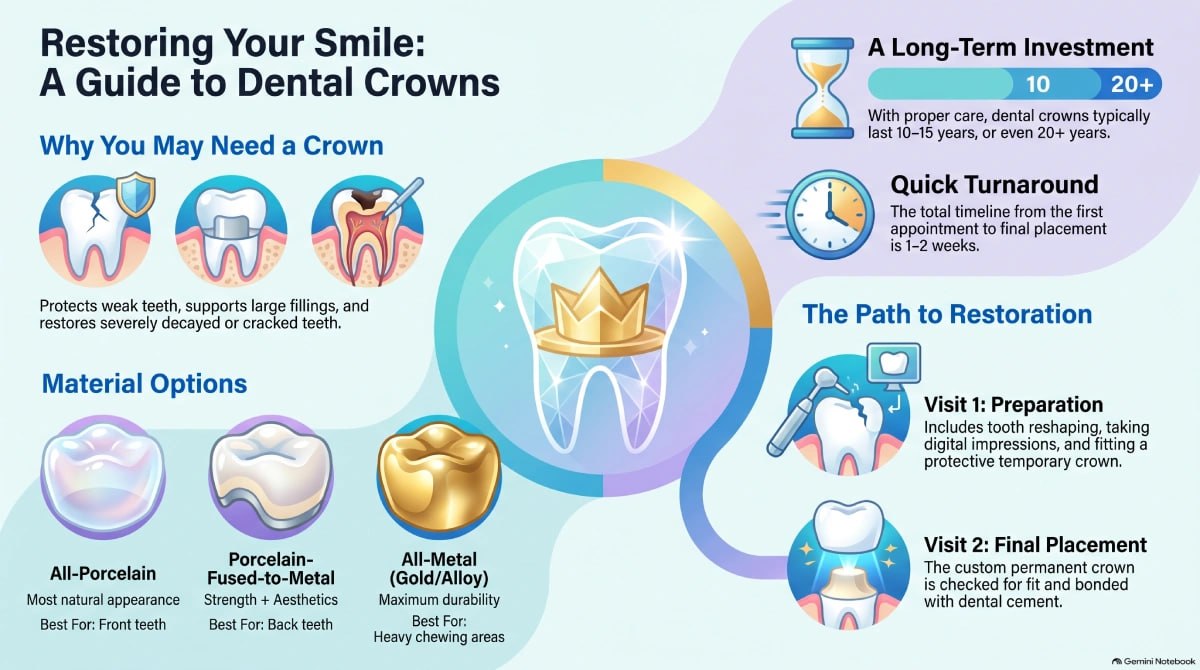
Dental Crown Materials in Jersey City
At Ararat Dental, Dr. Youssoufian offers several crown material options to suit your needs and budget:
Porcelain Crowns (All-Porcelain)
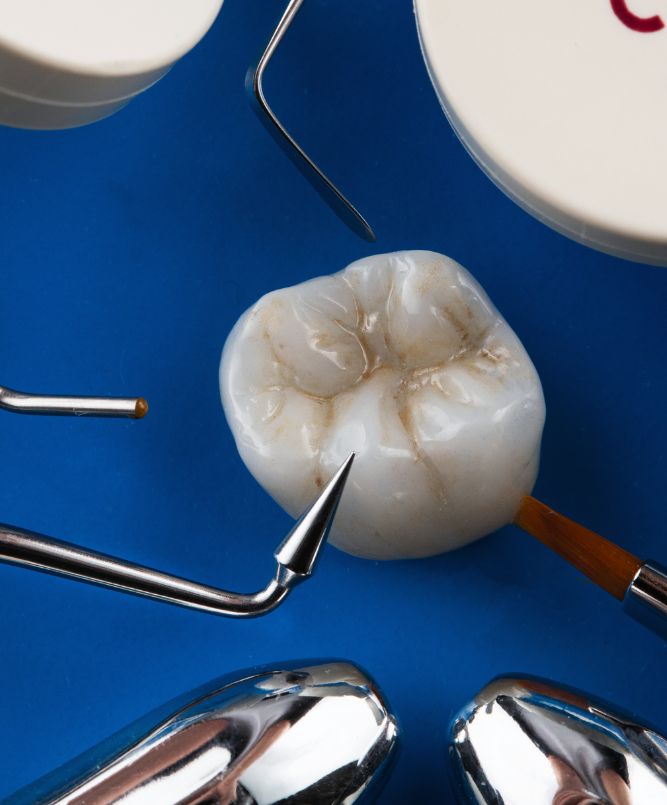
All-porcelain crowns are the most natural-looking option and ideal for front teeth. They match your natural tooth color beautifully and resist staining. However, they’re slightly less durable than other materials for heavy chewing areas.
Porcelain-Fused-to-Metal (PFM) Crowns
PFM crowns combine the strength of metal with the aesthetic appeal of porcelain. The metal base provides excellent durability while the porcelain exterior looks natural. This is an excellent choice for back teeth where durability matters most.
All-Metal Crowns
Gold or other alloy crowns are the most durable option available. While less common due to their visible metal appearance, they’re ideal for patients who prioritize longevity and have no aesthetic concerns.
Composite Resin Crowns
A more affordable option, though less durable than porcelain. Suitable for temporary crowns or patients on a tight budget.
Which Material Should You Choose?
Dr. Youssoufian will recommend the best material based on the tooth’s location, your bite force, aesthetic goals, and budget. At your free consultation, we’ll discuss all options and their costs.
Dental Crown Procedure: Timeline & What to Expect
The dental crown process at Ararat Dental typically involves two appointments:
Appointment 1: Tooth Preparation (45–60 minutes)
- Local anesthesia applied
- Damaged tooth is reshaped to prepare for the crown
- Tooth impression taken (digital or traditional)
- Temporary crown fitted to protect the prepared tooth
- Impressions sent to dental lab for custom crown fabrication
Lab Fabrication (5–7 business days)
While your permanent crown is being crafted, you’ll wear the temporary crown. Avoid sticky foods and chew carefully.
Appointment 2: Crown Placement (30–45 minutes)
- Temporary crown removed
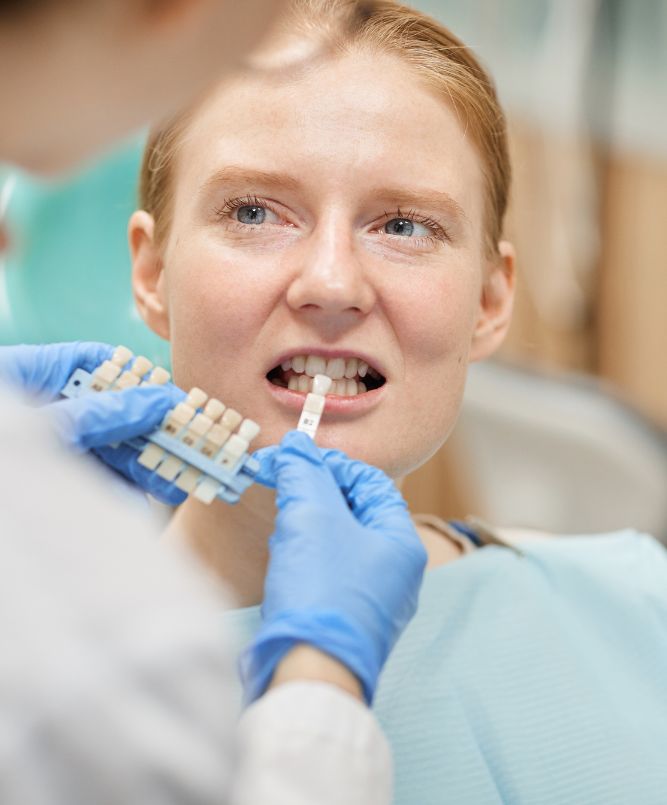
- Permanent crown checked for fit, bite, and appearance
- Final adjustments made if needed
- Crown bonded permanently with dental cement
- Bite and appearance verified
Total Timeline: 1–2 weeks from first appointment to final crown placement.
Cost of Dental Crowns in Jersey City
Prices vary by material and complexity, but typically range from $800–$1,500 per crown at Ararat Dental. Our team can discuss financing options and insurance coverage during your consultation.
Register for Free Consultation With Dr. Anahid Youssoufian
Dental Crowns
A Porcelain Crown is a tooth-shaped “cap” that is placed over a tooth, to cover the tooth to restore its shape and size, strength, and improve its appearance.
A crown might be needed to:
- Protect a weak tooth from breaking or holding together parts of a cracked tooth.
- Cover and support a tooth with a large filling when there aren’t a lot of teeth left.
- To make a cosmetic modification.
When is a dental crown needed?
A dental crown is recommended in cases, including:
- An advanced tooth decay which cannot be treated with a filling
- A severely cracked tooth, which needs extra support to stay together
- Excessively worn out teeth (caused by tooth grinding or acid reflux, bulimia or acidic diet)
- To support a bridge
- To cover a tooth implant
Cosmetic reasons, when a tooth is severely discolored or misshaped
Types of dental crowns
There are various types of dental crowns to choose from:
- Metal crowns: It comprises of gold and other base metal alloys. They are durable and last longer in comparison to the other types of dental crowns. The biggest drawback is its distinct color.
- Porcelain fused to metal crowns: This type of dental crown can easily be matched to the color of the neighboring teeth. Though it looks natural, it is subjected to wear and tear.
- All resin crowns: It is an economical option but is vulnerable to fractures and damage.
- All-Ceramic Crowns: It is an ideal choice if you are looking for a natural-looking tooth but aren’t strong. It is highly recommended for a front tooth.
- Gold crowns: It is made of gold but is rarely suggested for aesthetic appeal.
- Zirconia crowns: It is the most strong and natural looking type of crown but highly expensive.
Dental crown procedure
If the tooth’s pulp has not been affected, the decayed areas are removed, and the tooth’s edges are smoothed to fit the future crown. The amount of tooth taken out depends on the type of crown used. The metal ones are thinner and require a wider base while porcelain crowns are thicker and need a thin base. If the natural tooth is too small to support the crown, the dentist will add material to compensate. Once the base is brought to the right dimension to fit the crown, the dentist uses a paste to take the impressions of your teeth. Impressions on both upper and lower teeth are taken, so that the crown will perfectly fit the space which needs to be covered and will not impact the opposite teeth.
At the end of the appointment, a temporary crown can be fitted for your comfort (although it is not compulsory).
The impression is sent to a dental lab, where the crown is produced. Usually, it takes two to three weeks for the crown to be sent back to the dental office. When the crown is available, you will be invited to the office for the fitting. The crown is attached to the shaped tooth using cement. You will not be able to eat for one-two hour until the cement is fully hardened.
The dental crown acts as a normal tooth and does not need special maintenance. Proper dental hygiene is enough to keep it in good shape for a long period.