Dental Bridges in Jersey City
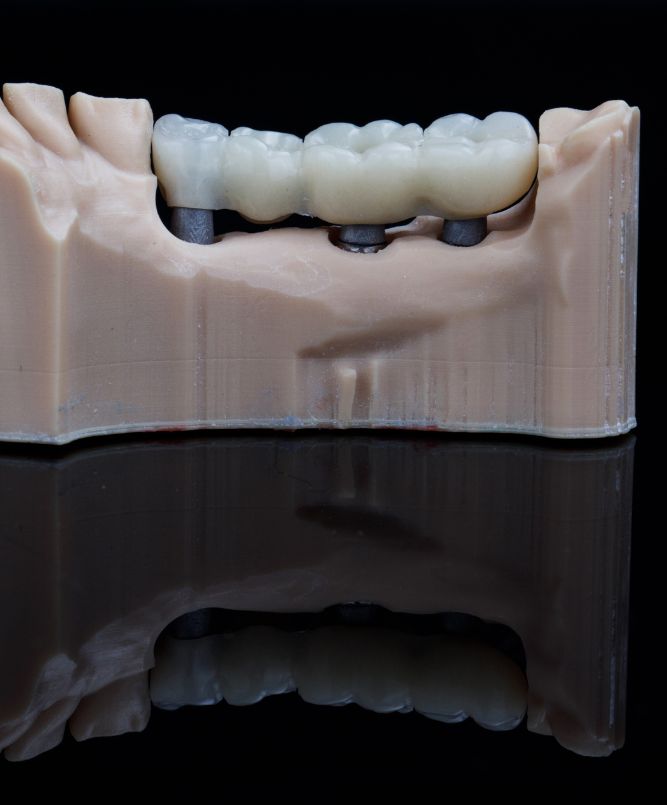
A dental bridge is a false tooth that is used to fill the gap created by a missing tooth or teeth. A gap between your teeth can be potentially dangerous to your dental health, as it can cause your teeth to shift resulting in a change in your bite that could be painful. Dental bridges help alleviate this problem by using the two surrounding teeth as anchors to hold a false tooth in the place where the gap is. Typically, porcelain crowns are placed over the surrounding teeth, and the false tooth, known as a pontic, is fused between them.
Dental bridge benefits
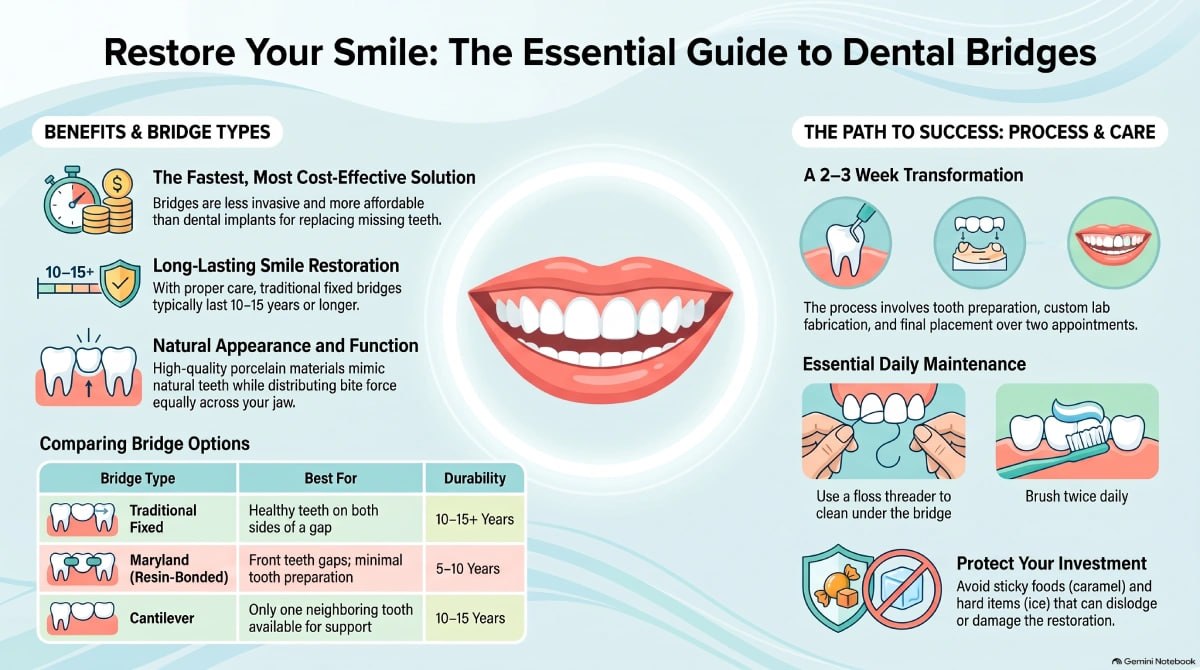
Known as the fastest, cheapest, and most effective way to treat a dental gap, the bridge is popular all over the world. The reasons why people turn to dental bridges for replacing missing teeth include:
- The bridge treatment is open for people of all ages, provided that the neighboring teeth are in good condition.
- Natural appearance
- Smile restoration and maintains the shape of your face
- Distributes the bite force equally
- Prevent the teeth from drifting from its original position
- Less invasive than the dental implants
- As dental bridges are fixed, you need not worry about taking them out to clean
- Cost-effective and less expensive in comparison to dental implants
Addresses the speech problems.
Materials used for dental bridges
There are three types of materials used for dental bridges:
- All-porcelain bridges
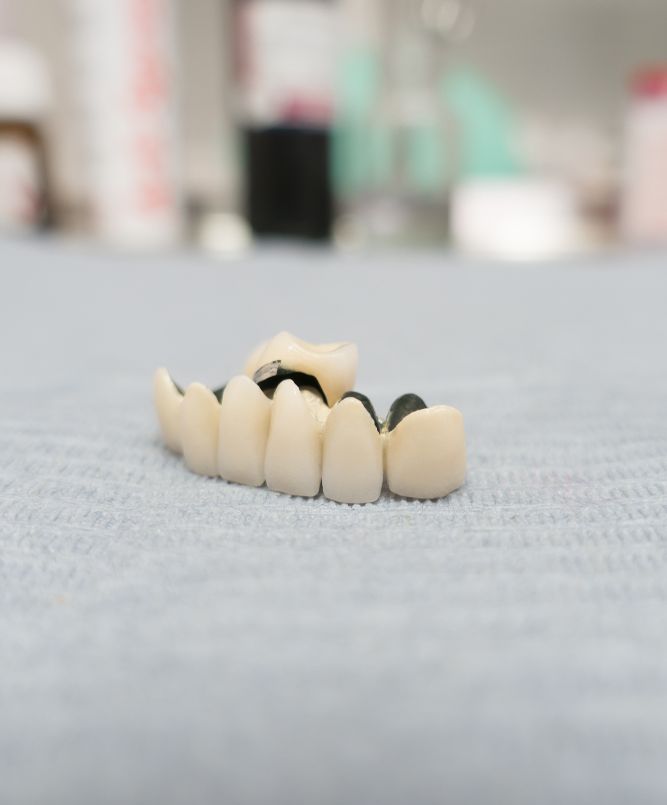
- Porcelain fused to metal (gold dental bridges)
- All metal bridges
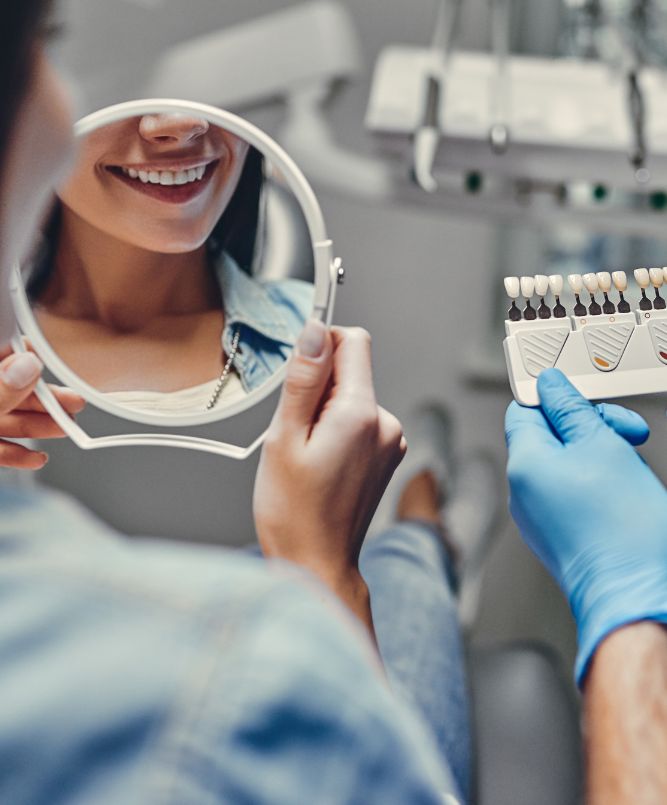
The porcelain and porcelain fused with metal dental bridges are tooth-colored bridges used to restore teeth. Porcelain dental bridges are preferred because of their aesthetic value. They look quite real and are excellent for the restoration of back and front teeth. Gold dental bridges are highly durable and assure the best fit.
As the cost and properties of these materials differ, it is important to discuss with the dentist the ideal material keeping your dental health and bridge position in mind.
Choosing the Right Bridge Type in Jersey City
At Ararat Dental, Dr. Youssoufian will assess your specific situation and recommend the bridge type that offers the best balance of durability, aesthetics, and cost for your needs.
Traditional Fixed Bridges (Most Common)
- Best for: Multiple missing teeth with healthy teeth on both sides
- Durability: 10–15+ years
- Cost: Moderate to high
- Appearance: Excellent (tooth-colored)
- Jersey City patients often choose this for front teeth replacements
Cantilever Bridges
- Best for: Single missing tooth with only one neighboring tooth
- Durability: 10–15 years
- Cost: Moderate
- Appearance: Good
- Less common due to potential stress on the single supporting tooth
Maryland Bridges (Resin-Bonded)
- Best for: Front teeth gaps in younger patients with healthy teeth
- Durability: 5–10 years (requires more maintenance)
- Cost: Most affordable option
- Appearance: Excellent for front teeth
- Wings bond to the back of neighboring teeth—minimal tooth preparation needed
Dental Bridge Care: Tips for Long-Term Success
Proper maintenance is key to making your bridge last 10–15+ years. Here’s how to care for your restoration:
Daily Oral Hygiene
- Brush twice daily with a soft-bristled toothbrush
- Use a floss threader or water flosser to clean under the bridge and between teeth
- Avoid flossing directly between the bridge and gums—use a floss threader instead
- Clean around the abutment teeth (teeth supporting the bridge) thoroughly
Foods to Avoid
- Hard candies, nuts, and ice
- Sticky foods (taffy, caramel) that can dislodge the bridge
- Excessively hard foods that create stress on the supporting teeth
Regular Dental Visits
- Schedule checkups every 6 months
- Professional cleanings remove buildup under the bridge
- Dr. Youssoufian monitors the bridge for any signs of wear or decay
Signs You Need Bridge Replacement
- Visible gaps or spaces developing under the bridge
- Persistent discomfort or pain when chewing
- Changes in your bite
- The bridge feels loose
Dental Bridge Cost & Longevity in Jersey City
A three-unit traditional bridge typically costs $2,000–$4,000 at Ararat Dental. While this is an investment, it’s often more affordable than implants ($1,500+ per tooth) and provides a reliable long-term solution when properly maintained.
Frequently Asked Questions
From your first consultation to bridge placement typically takes 2–3 weeks. The first appointment involves tooth preparation and impression (45–60 min), then the bridge is fabricated at the lab (5–7 days), and the second appointment places the bridge (30–45 min). Faster turnarounds may be available for some cases.
Many dental insurance plans cover 50–80% of bridge costs, similar to crowns. Coverage depends on your specific plan. At Ararat Dental, we’ll verify your benefits before starting treatment and help you understand your out-of-pocket cost.
Yes, bridges can be removed by a dentist, but they’re not designed to be removable by the patient. Once your bridge is placed, it’s permanent (fixed in place). If you need removal in the future due to decay or damage, Dr. Youssoufian can carefully remove it and create a new restoration.
Dental Bridges require support from neighboring teeth, are less invasive, cost less, and work quickly. Dental Implants are independent (don’t require neighboring teeth), are more durable, but cost more and take longer (4–6 months healing). Bridges are ideal for multiple missing teeth; implants are ideal for patients who want the most natural, independent solution.
- Traditional 3-unit bridge: $2,000–$4,000
- Maryland bridge: $1,500–$2,500
- Costs vary based on materials and complexity
Financing options available. Ask about our payment plans during your free consultation.
Contact Ararat Dental immediately. Depending on the damage, the bridge might be repairable, or we may need to fabricate a new one. Avoid chewing on the damaged bridge and don’t delay seeking treatment—continued stress can damage the supporting teeth.
Check Out Our Amazing Transformations
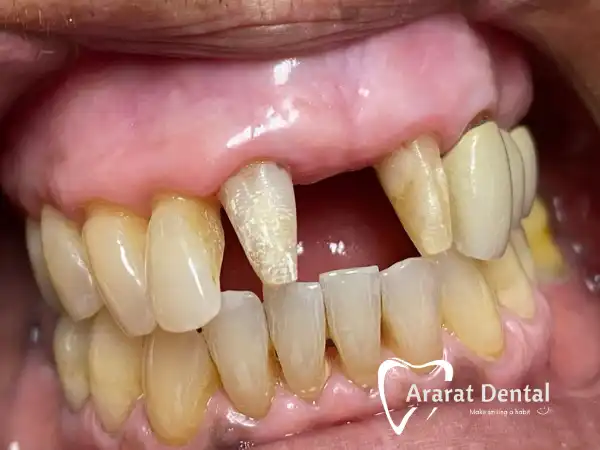
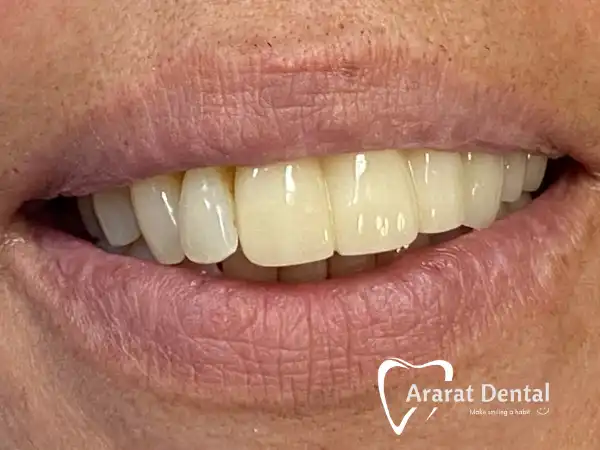
3 Unit Cosmetic Porcelain Bridge
Register for Free Consultation With Dr. Anahid Youssoufian
Our Google Reviews
Dental Bridges
A dental bridge is a false tooth that is used to fill the gap created by a missing tooth or teeth. A gap between your teeth can be potentially dangerous to your dental health, as it can cause your teeth to shift resulting in a change in your bite that could be painful. Dental bridges help alleviate this problem by using the two surrounding teeth as anchors to hold a false tooth in the place where the gap is. Typically, porcelain crowns are placed over the surrounding teeth, and the false tooth, known as a pontic, is fused between them.Dental bridge benefits
Known as the fastest, cheapest, and most effective way to treat a dental gap, the bridge is popular all over the world. The reasons why people turn to dental bridges for replacing missing teeth include:- The bridge treatment is open for people of all ages, provided that the neighboring teeth are in good condition.
- Natural appearance
- Smile restoration and maintains the shape of your face
- Distributes the bite force equally
- Prevent the teeth from drifting from its original position
- Less invasive than the dental implants
- As dental bridges are fixed, you need not worry about taking them out to clean
- Cost-effective and less expensive in comparison to dental implants
Materials used for dental bridges
There are three types of materials used for dental bridges:- All-porcelain bridges
- Porcelain fused to metal (gold dental bridges)
- All metal bridges
Types of dental bridges
- Traditional fixed bridge: It is the most common dental bridge type and is made of ceramic or porcelain fused to metal. This method is used where there are natural teeth on each side of the gaps.
- Cantilever bridge: It is used when there are healthy teeth only on one side of the missing teeth. This dental bridge procedure involves anchoring the artificial tooth over a single or more of the natural adjacent teeth.
- Maryland bridge: It is made of porcelain fused to metal and it is used to cover front gaps. This bridge involves artificial teeth that are fused to the metal and are cemented to the back of the natural teeth.